Why do school fees arrive late?
When fees are late, it is tempting to assume families are avoiding payment. In practice the causes are usually in the school's process:
- The amount is unclear. Fees are bundled with trips, uniforms or meals, and a parent cannot tell what the total is for.
- The invoice arrives too late. A bill that lands after the due date is late before it is opened.
- Paying is awkward. A bank transfer needs account details and a reference, and a mistake means the school cannot match the money.
- Nobody checks. Payments sit unmatched, so the school chases families who have already paid.
- Exceptions are handled informally. A promise made at the school gate never reaches the finance office.
Start with a clear fee structure and calendar
Decide what is charged, how often and when, and publish it before the year starts. A one-page calendar that lists each charge, its amount and its due date removes most of the questions a finance office answers by phone.
- List every charge separately: tuition, registration, materials, transport, meals and trips.
- Choose a billing rhythm (term, half-term or month) and keep to it.
- Set due dates a few weeks after the invoice date, and avoid dates that fall in holidays.
- Write down what happens if a payment is late, in plain language, and apply it consistently.
Complex structures such as sibling discounts or instalments need software that can represent them. In AcademicsFlow they are custom changes, and the fee management software page says plainly what is standard.
Invoice early, and make the invoice complete
An invoice that is easy to act on says five things: who it is for, what it is for, how much, by when, and how to pay. Send it in time to be read and paid before the due date, not on it. Invoicing per student, rather than per family, avoids confusion when families have children in different year groups.
Make paying take one minute on a phone
Online payment removes the most common reason for late and unmatched fees. The safest way to offer it is through a payment provider's own hosted page. The family enters card details on the provider's page, and the school receives only the result. That keeps card data off the school's systems, which also reduces the school's own security burden. The PCI Security Standards Council publishes the card-data standards that providers meet.
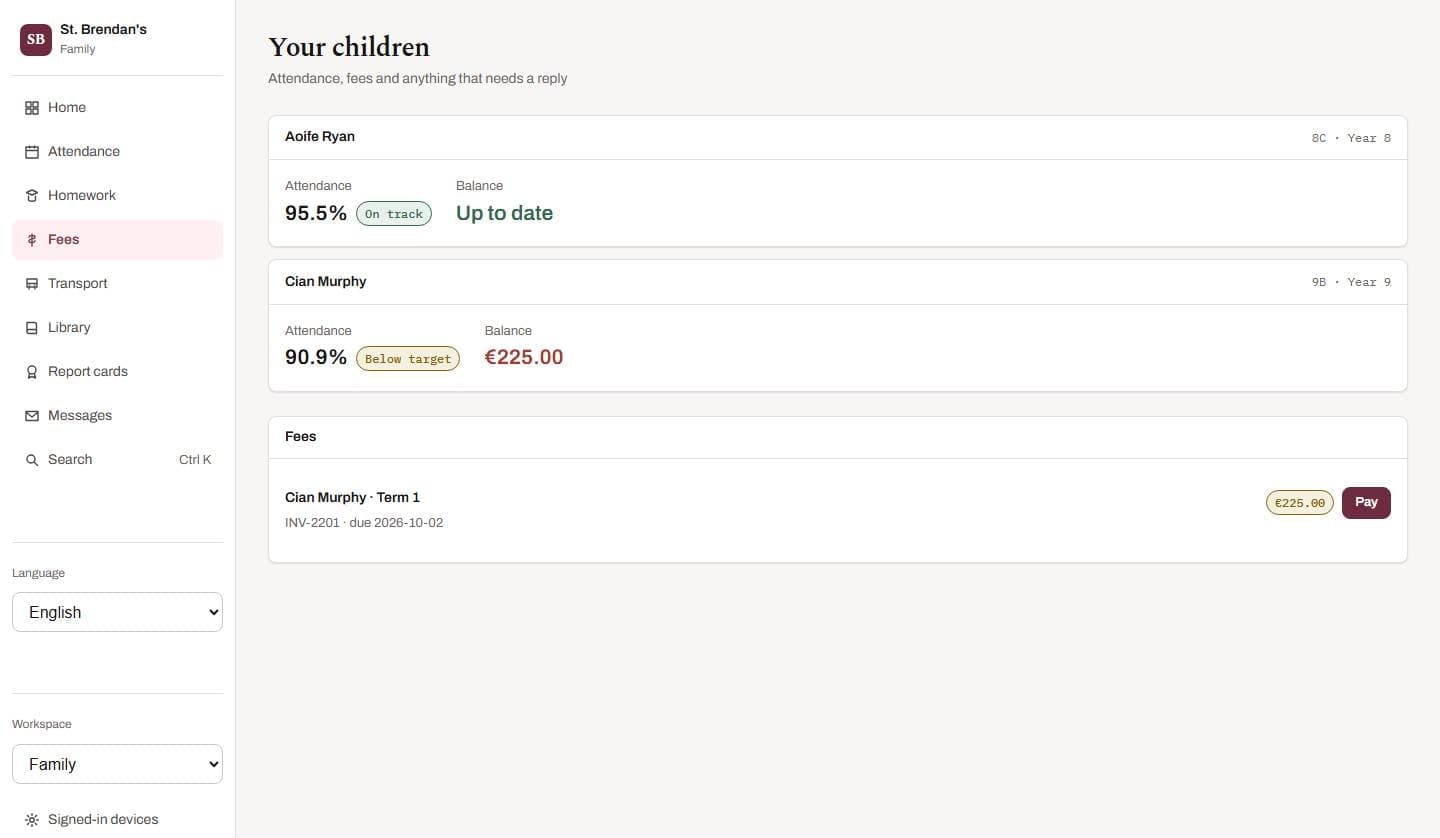
Two details matter in practice. The payment should be recorded exactly once, even if a parent taps twice or the connection drops and retries. And the payment should be matched to the right invoice automatically. In AcademicsFlow, paying opens the provider's hosted page, and payment intents are idempotent, so a double-tap or a retry cannot charge a family twice.
Communicate on a schedule families can rely on
Families respond to a predictable rhythm. A sensible pattern is a notice when the invoice is issued, a reminder shortly before the due date, and a short follow-up after it. Keep the tone factual, name the amount and make paying one tap away.
- Send reminders through the channel the family chose, and avoid late-night messages. AcademicsFlow's quiet hours hold non-urgent notices until morning.
- Offer a conversation to families who are struggling, and a route for them to ask for a plan.
- Do not name or shame. Arrears are a private matter between the school and the family.
Handle exceptions as decisions, not favours
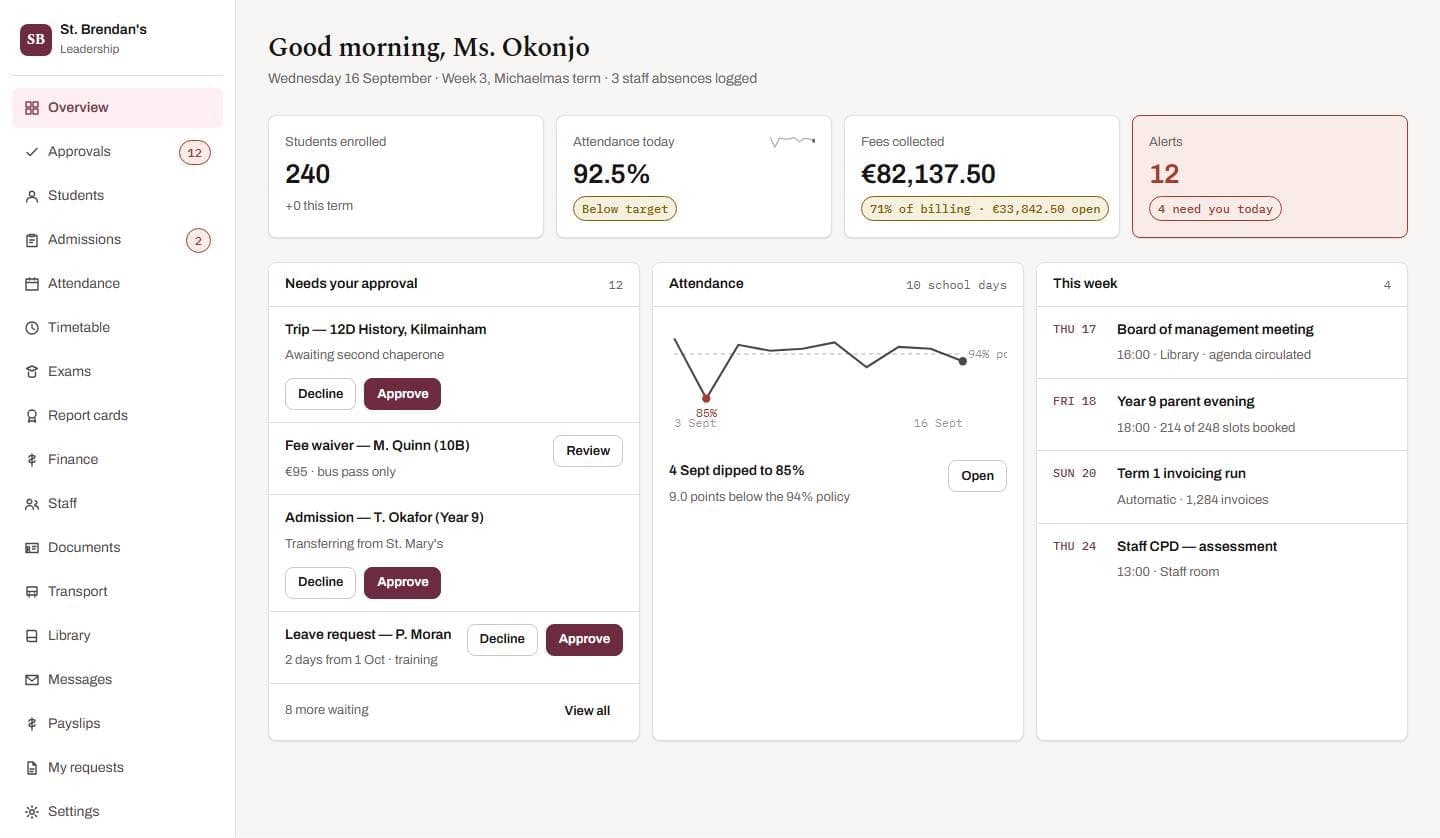
A hardship case, a late enrolment or a sibling discount is a decision with a financial effect. Decide who may approve it, record the reason, and keep a trail. In AcademicsFlow, fee waivers and exceptions go to the principal's approvals queue, so the decision is recorded and made by the right person rather than agreed informally.
Reconcile weekly and watch four figures
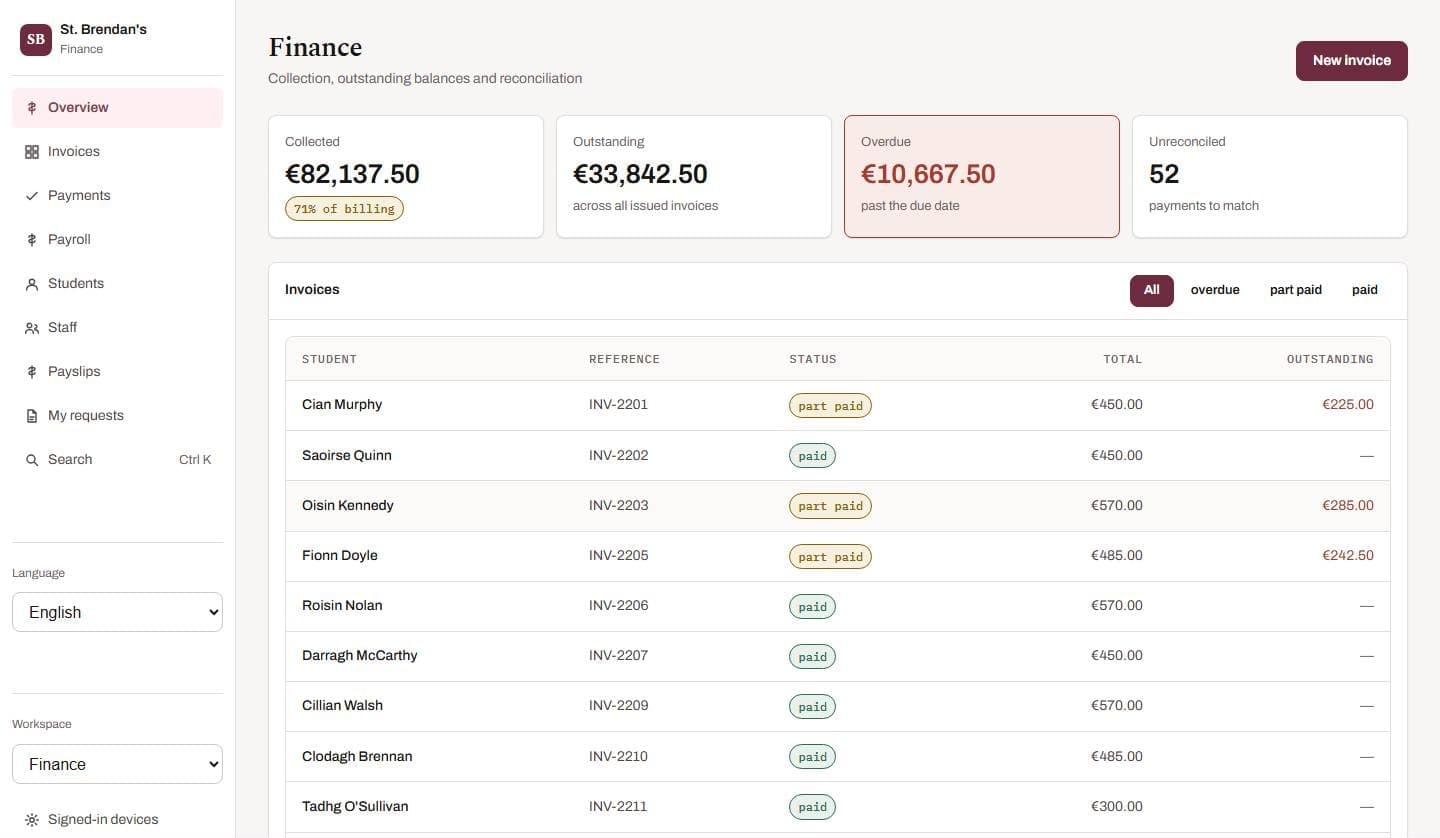
Reconciliation means matching money received to invoices. Do it every week, not at term end. Four figures tell you where you stand:
| Figure | What it tells you | What to do if it grows |
|---|---|---|
| Collected | Money received and matched to invoices | Compare with the same point last term |
| Outstanding | Invoiced and not yet paid | Check that reminders have gone out |
| Overdue | Outstanding and past its due date | Contact families and offer a plan where needed |
| Unreconciled | Money received but not yet matched | Match it quickly, so nobody is chased who has paid |
A useful measure of the whole process is the collection rate for a billing period: the amount collected divided by the amount invoiced. Track it each term and look for the cause when it drops, rather than for someone to blame.
How does AcademicsFlow support this?
The Fees and Finance module invoices by student, shows a status of paid, part paid or overdue on each invoice, opens the payment provider's hosted checkout for families, reconciles payments against invoices, and leads its overview with collected, outstanding, overdue and unreconciled. Families see the balance for each of their children and pay in one tap. See school management software for how fees connect to the rest of the school.